Family Holidays in the Dordogne: How to Choose the Right Campsite Based on Your Children’s Age
Choosing a campsite for a family holiday in the Dordogne isn’t just about location or star rating. What really makes the difference is how well the campsite matches the age of your children.
A stay that works perfectly with a baby won’t feel the same with an 8-year-old — and teenagers have very different expectations again. Based on what families actually look for (and what we see work best on site), here’s a clear, age-by-age guide to help you choose wisely and avoid disappointment.
Holidays with Babies and Toddlers (0–3 years): calm, safety and routine

When travelling with very young children, parents are not looking for “activities” — they are looking for reassurance.
What matters most at this age:
- calm surroundings
- safe, clearly visible spaces
- shallow water areas
- facilities adapted to daily routines
At Camping Le Séquoia, families with babies often appreciate:
- a paddling pool and shallow lagoon areas where little ones can safely splash and paddle
- family changing rooms, which make pool time much easier
- baby kits available to reduce what parents need to bring
- accommodation and pitches that can be placed away from evening entertainment, on request
Parents sometimes ask about lifeguard presence. While there is no lifeguard at the moment, the aquatic areas are designed to be readable and family-friendly, with shallow zones and good visibility, encouraging active parental supervision.
👉 For this age group, the goal isn’t stimulation — it’s peace of mind.
Young Children (4–7 years): play, water and gentle energy
From around 4 years old, children want to explore, play and interact — but still within a reassuring environment.
For families with children aged 4 to 7, the key criteria are:
- playgrounds close to accommodation
- water games and shallow pools
- simple, structured activities
- a safe feeling of freedom
At Le Séquoia, this age group particularly enjoys:
- the play areas and water features
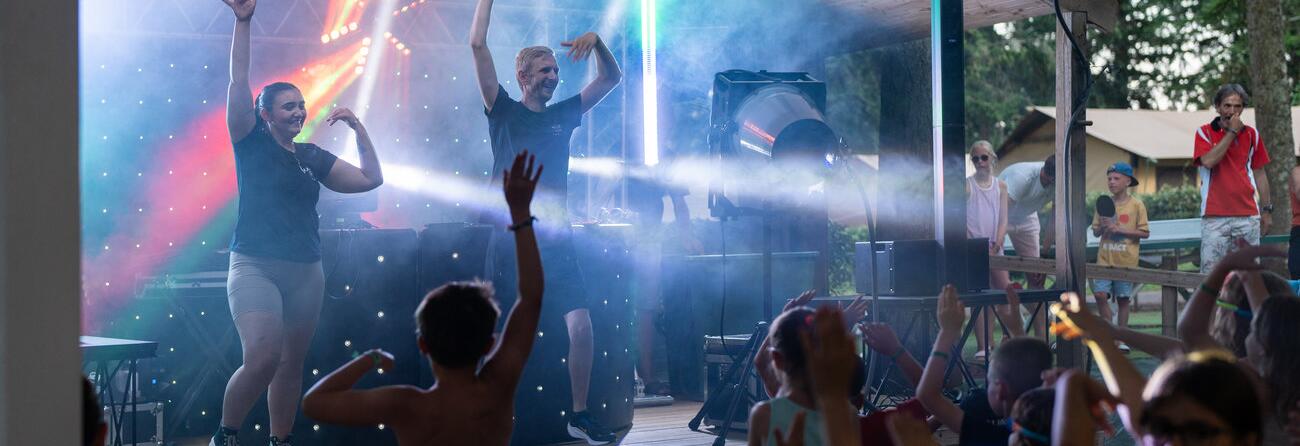
- the mini disco, which is often a highlight for younger children
- the Mini Club (ages 5–12), offering activities adapted to their rhythm
Parents sometimes wonder whether the atmosphere is “too lively or too calm”. The reality is that families can request accommodation:
- near play areas and pools if they want a lively environment
- or in quieter zones if naps and early bedtimes are a priority
This flexibility is often underestimated, but it makes a big difference for young families.
Children aged 8–12: freedom, friends and shared adventures
This age group is often the easiest to please — but only if the campsite offers enough variety.
What 8–12 year-olds look for:
- water slides and large swimming areas
- freedom to move around safely
- friends of the same age
- organised activities without pressure
At Camping Le Séquoia, children in this age range are drawn to:
- the water slides and the large lagoon, which allow for independent play
- the Mini Club (5–12 years), with age-adapted activities
- sports tournaments, which naturally bring children together
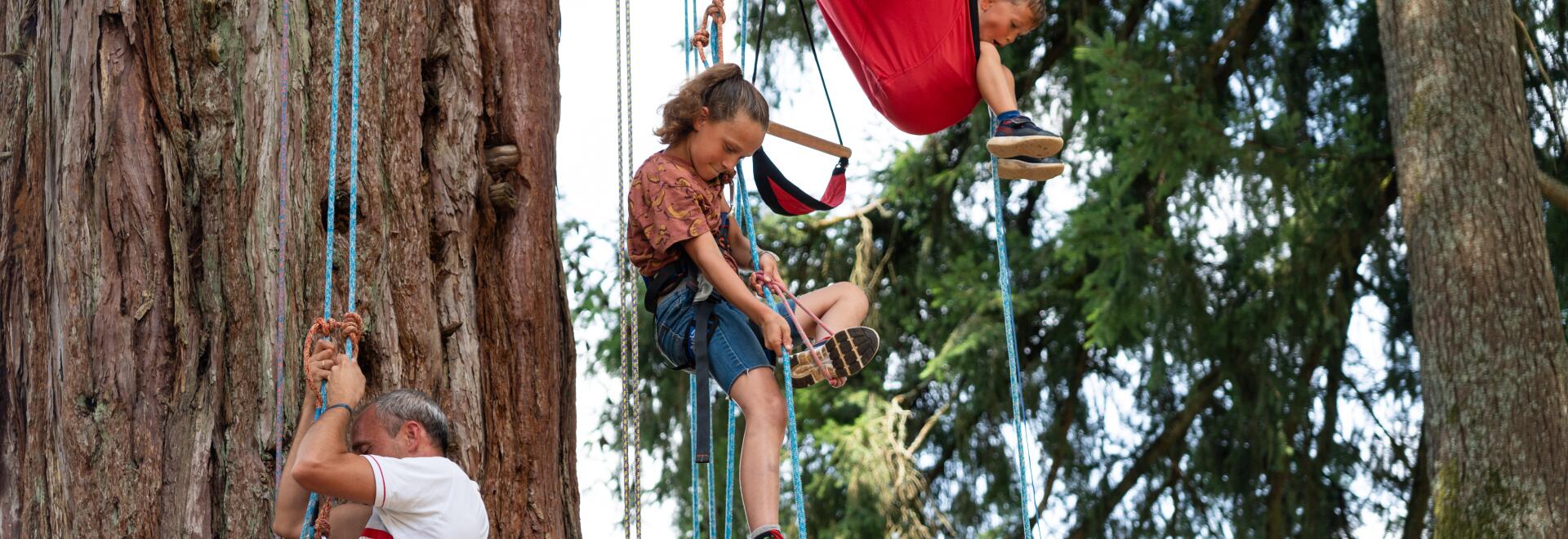
- outdoor activities like archery and climbing in the Sequoia trees on site, which create strong holiday memories
For parents, this age often marks the beginning of real relaxation — children are busy, active and happy, while still remaining within a secure environment.
Teenagers: independence, social life and honest expectations
Teenagers are the most complex group — and it’s important to be honest about that.
They are less represented overall, but their expectations are clear:
- independence
- sports and shared activities
- good Wi-Fi
- spaces where they don’t feel treated like children
What teenagers appreciate during a stay in the Dordogne :
- sports activities and football tournaments
- a teen club (Club Ado)
- yoga sessions shared with adults or teens
- the presence of other teenagers during peak season
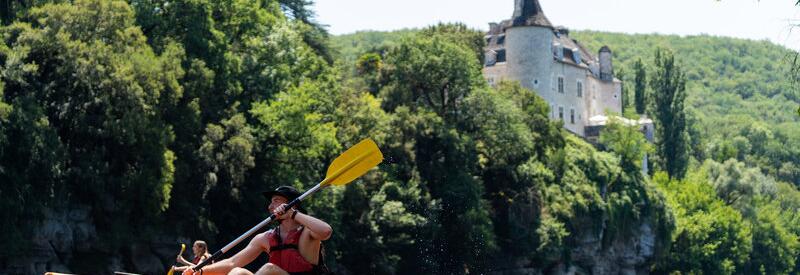
- Outdoor activities, like canoeing down the dordogne
That said, experiences can vary depending on the group dynamic and the season. Some families love the atmosphere; others expect something closer to a dedicated teen resort. Being transparent about this helps families choose with confidence.
👉 For teenagers, the presence of other teens often matters as much as the activities themselves.
Choosing the right campsite: it’s about balance, not perfection
There is no “perfect” campsite for all families — but there is a campsite that fits your family better than others.
Before booking, it helps to ask yourself:
- How old are my children right now?
- Do we value calm or activity more?
- Do we prefer structured entertainment or free play?
- What will make us feel relaxed as parents?
Answering these questions honestly leads to better holidays — and fewer surprises.
FAQ – Choosing a Family Campsite in the Dordogne
Yes, thanks to paddling pools, baby kits, family changing rooms and calm areas.
No lifeguard at the moment; parental supervision is encouraged.
Yes, accommodation and pitches can be requested near or away from entertainment areas.
Yes, especially during peak season, thanks to sports, teen activities and shared spaces.
Most families report that children stay busy thanks to water areas, clubs and outdoor activities.
Conclusion: the right age, the right rhythm, the right holiday
A successful family holiday in the Dordogne isn’t about ticking every box — it’s about choosing a campsite that fits your children’s age and your family rhythm.
By understanding what matters at each stage, you can enjoy:
- less stress
- happier children
- and more meaningful shared moments
And that, in the end, is what family holidays are really about.